
This is a complete guide to the infraspinatus tear/ strain.
If you want to know what your treatment options are for an infraspinatus strain, you’ll enjoy the actionable tips in this new article.
In other words, you won’t be reading outdated suggestions that don’t work!
Note: read the disclaimer and always see a doctor first. If you need some help virtually (or in-person) the “Locally World Famous Chiropractors®” at Performance Place Sports Care are ready to work with you!
Let’s dive right in.
What Is The Infraspinatus Muscle?
The Infraspinatus muscle is one of the four rotator cuff muscles of the shoulder, with the primary function of stabilization of the glenohumeral (GH)l joint.
The muscle resides in a section of the shoulder blade called the fossa of the scapula and is innervated by the suprascapular nerve. The infraspinatus muscle-tendon is attached to the greater tubercle of the humerus bone.
Infraspinatus pain often presents as pain on the front side of the shoulder. Infraspinatus muscle and tendon pain began often without trauma, dubbed as an “overuse” injury.
Compression of the suprascapular nerve (or its contributing spinal nerve roots) can create tension and “strains” in the muscle. It will feel like a tight muscle that can’t be stretched out. The contributing spinal nerve roots that may be compressed, creating trigger points are C6 and C7.
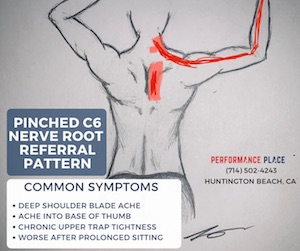
Symptoms that may point upstream from the shoulder blade
C6 and C7 spinal nerve roots can create a surprisingly wide range of associated symptoms that most people never connect to their shoulder blade pain.
Tricep ache. Shoulder blade winging. Weakness in a pushup or bench press. Neck tension. Tight pectoral muscles particularly the pectoralis minor. Sternal pain without fatigue or shallow breathing. Upper trapezius tightness. Pain along the medial border of the shoulder blade between the shoulder blades.
If any of those sound familiar alongside your shoulder blade pain it is worth considering whether the root cause is local to the shoulder at all or whether it is being driven from further up the chain.
Do not overlook nerve pressure as the root cause
Many of the people we work with end up having suprascapular nerve compression as the actual driver of what presents as infraspinatus pain. It is also possible to have a local muscle or tendon issue. But before assuming it is local please do not overlook the possibility that nerve pressure is the root cause of what you are feeling.
The distinction matters enormously because treating a nerve compression issue with local shoulder exercises is like treating a pinched garden hose by working on the end of the hose. The water flow does not change until you address where the pressure is coming from.
What imaging does and does not tell you
Here is something that surprises most people.
Even when MRIs show degeneration or tears to the infraspinatus tendon the nerve could still be the root cause of the pain. Tears and degeneration do not always hurt. They are found on MRI and musculoskeletal ultrasound in completely pain-free athletes all the time.
The infraspinatus is the second most commonly torn muscle and tendon in the shoulder. While it can be genuinely disabling it does not have to be the reason you stop doing what you love. The injury on the image and the pain you are experiencing are not always the same story.
This is one of the most important things to understand before committing to a treatment plan. Treating the finding on the image rather than the root cause of why you are in pain is one of the most common missing opportunities we see in shoulder blade cases.
What actually changes it
When we improve how the shoulder joint moves and distribute load away from the structures that have been absorbing too much of it the pain often resolves even when imaging shows significant findings.
The goal is not to fix what is on the MRI. The goal is to find and address the root cause of why the glenohumeral joint is not functioning the way it should. When that is addressed the surrounding muscles stop overworking, the nerve pressure often reduces and the infraspinatus gets the break it needs to recover.
If you want a clinical eye on your specific situation
If you have been dealing with shoulder blade or infraspinatus pain that has not responded to what you have tried we offer a free Discovery Call with our team. We work with active people via telehealth across multiple states so location is rarely a barrier.
Part 1: How To Rehab Infraspinatus Tendon Pain
Here’s the order of importance when it comes to infraspinatus pain (and shoulder pain in general). If we don’t correct dysfunction in this order, then we will not improve the shoulder. Period.
- Core and High Intra-Abdominal Pressure
- Thoracic and Cervical (neck) Mobility
- Shoulder Blade Stability
- Glenohumeral joint Motion
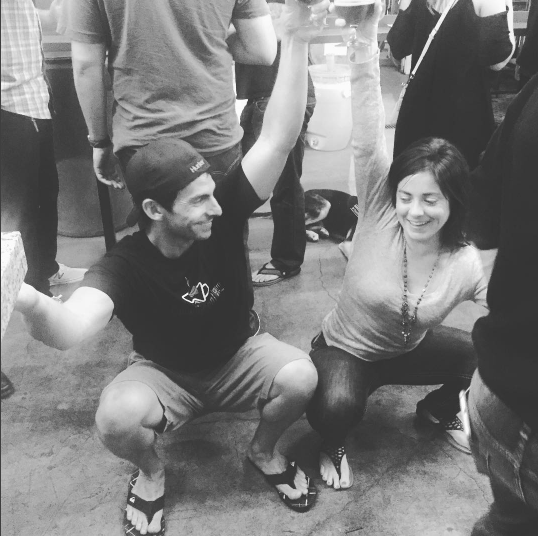
I’ve seen many shoulder cases and this process works. Sorry I couldn’t resist using the Overhead Beer Goblet Squat on my birthday as an example.
I can remember one patient specifically, a weightlifter who had been seeing a massage therapist for months and was still unable to lift a 45-pound barbell over his head without pain.
By using this method, I was able to improve his infraspinatus pain within minutes by improving his shoulder blade stability. And by improving it, I mean he was so excited, he hugged me. True story!
I’m not trying to toot my own horn, but I just want to bring to attention how quickly an infraspinatus injury can resolve if we are addressing the right things at the right times.
This is an example of a functional issue…not a structural issue. This can happen regardless of where the pain is.
Here’s an exercise I like to give to many people that I see with shoulder pain. Granted, it won’t work for everyone, but it helps many. It’s called a Turkish Get up (Extension to Low Sweep).
If you would like to see more, we do have a course coming out.
Where is the infraspinatus?
Anatomically speaking, the infraspinatus is found on the back, originating inferiorly along the spine of the shoulder blade (also known as the scapula) extending out and inserting onto the humeral head where it turns into a tendon. Just beneath the tendon, the infraspinatus bursa cushions it. Infraspinatus is part of the rotator cuff muscle group of the shoulder, and a infraspinatus tear (also known as a strain) can be the cause of pain within the shoulder joint.
There are three other muscles that make up the rotator cuff along with infraspinatus. They are:
- Supraspinatus
- Teres Minor
- Subscapularis
When we are considering shoulder pain, there are other structures that need to be ruled out as the painful source:
- Posterior joint capsule of the shoulder
- The glenoid labrum
- Subscapularis
Here’s a video we made years ago called “Infraspinatus Strain Pain Treatment Video.” It’s an oldie, but a goodie.
Part 2: Function Of The Infraspinatus And Who Tears It
More about the function of the Infraspinatus and who gets a strain of the Infraspinatus
The main function of infraspinatus is external rotation and stabilization of the shoulder joint along with elevation and depression of the shoulder. The first muscle susceptible to a tear within the rotator cuff muscles is the supraspinatus and infraspinatus is the second.
An infraspinatus tear is generally due to an overuse injury that stresses the shoulder joint and leads to both instability and joint laxity. Baseball and volleyball players are known to have this injury due to the demands made on the shoulder with constant overhead motion.
But it’s not just athletes that suffer with infraspinatus tears. Other repetitive stress motion injuries of this muscle and tendon can occur simply from driving with the arm held stretched out/extended on top of the steering wheel or from reaching back persistently with a computer mouse.
What kind of pain does an infraspinatus tear cause?
There are a few different symptoms that are possible:
- Pain radiating into the neck and upper back areas and down into biceps
- Inability to raise the arm above head because of stiffness and feeling numb
- Weakness in the shoulder
- Discomfort with sleep when rolling onto side
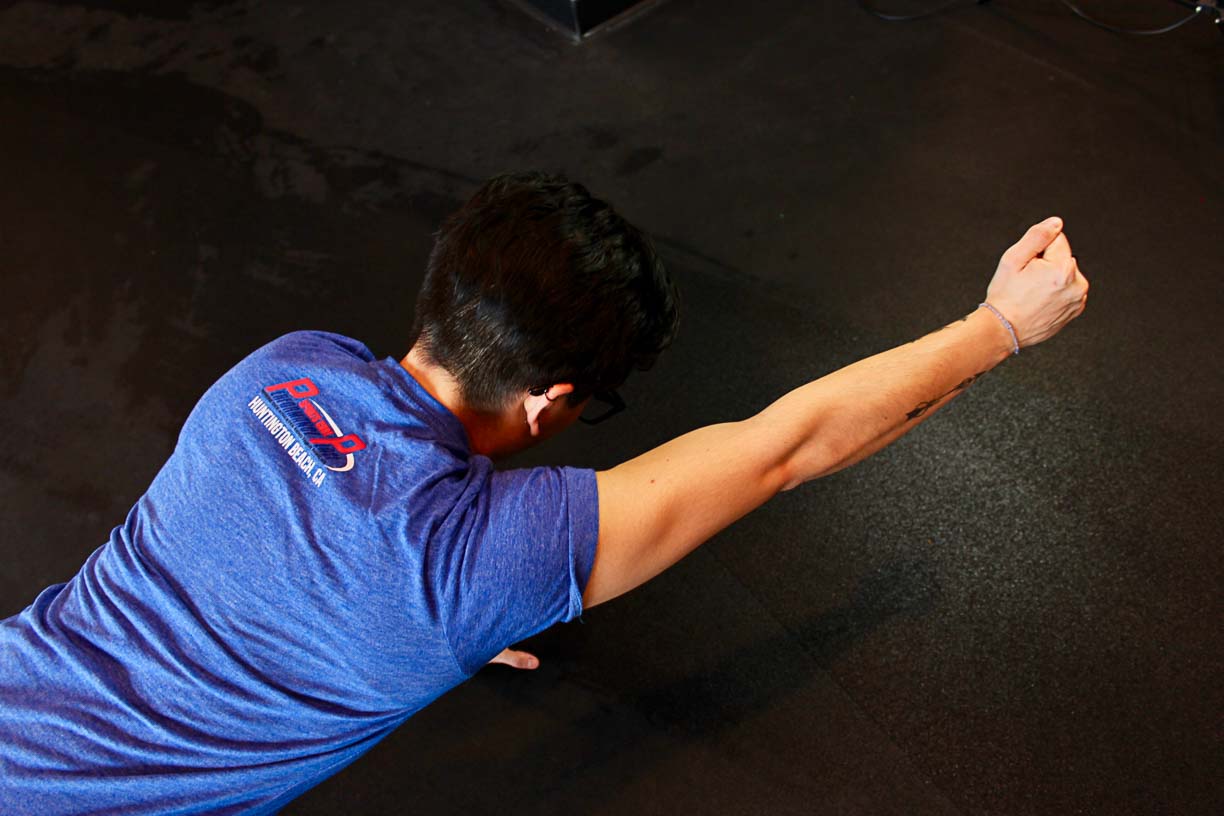
Chapter 3: Examination Of An Infraspinatus Strain
If you haven’t been to the doctor yet, you could be wondering why all of the odd “press into my hand” testing. This is a video series of some of the common tests you will see when you go in for a proper exam of the shoulder.
Together, these tests will guide your doctor to the correct diagnosis. Each video is very quick and at the end of each, I will tell you what each one is testing for.
Part 4: Infraspinatus Strain Symptoms & Treatments
How can an Infraspinatus Strain present and how can it be treated?
When observing the shoulder motion, the patient may experience pain throughout the full range of motion. Commonly known as the “arc of pain”, this is a positive indicator of a tear. Muscle weakness will develop secondary to the shoulder pain and you may also observe abnormal motion of the scapula.
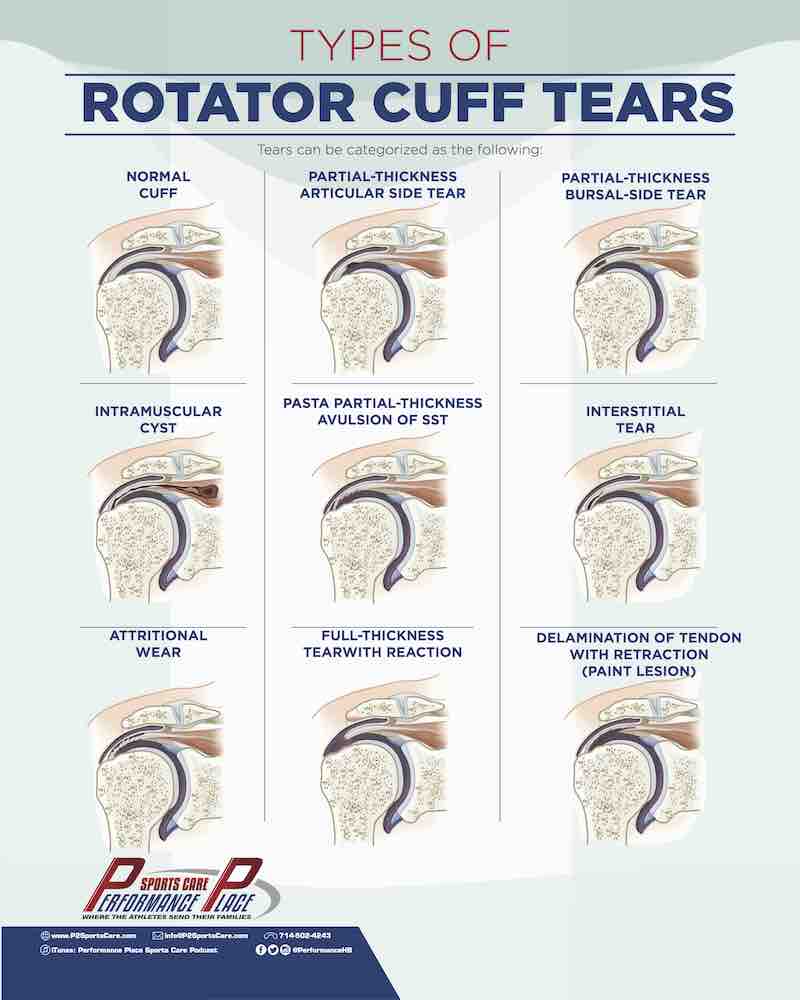
If a tear is diagnosed, there will very likely be scar tissue built up along the tendon and around the infraspinatus bursa causing a catching or grinding motion of the shoulder. The degree of a rotator cuff tear is difficult to determine without imaging. The degree of pain does not always correlate with the severity of the tear; some patients may present with decreased range of motion and a great amount of pain while others may have no pain yet still have limited range of motion.
The first imaging test to look at is an x-ray. While it won’t be able to show any soft tissue damage, it is helpful in ruling out other conditions. An x-ray will tell you if there is any joint degeneration, impingement from an osseous (bony) structure, or arthritis in the joint.
Treatment is based on the severity of the tear and its impact on the patient’s activities and ability to function.
Possible treatments for an infraspinatus tear may include:
- RICE (rest, ice, compress, elevate)
- Surgery based on the severity of the tear to reattach the muscle tendon
- Steroid injections
- Non-Steroidal Anti-Inflammatory medications
- Addressing the scar tissue formation in the shoulder joint
- Stretching
- Rehabilitative strengthening exercises
The last two treatments are very important and should be a part of any treatment regimen for an infraspinatous tear. Without proper rehabilitative strengthening exercise for the shoulder and treatments to address the scar tissue, more disabling conditions such as frozen shoulder can occur.
Before beginning any strengthening protocol, the muscles should be warmed up properly. This can easily be done with stretching such as the doorway stretch or the “threading the needle” yoga pose.
There are a couple of specific exercises to strengthen the muscles associated with an infraspinatus tear:
- Resistance band- external rotation motion
- Face pulls
- Side Planks
Approximately 6 to 8 weeks of treatment will be needed, depending on the severity of the injury, in order to both decrease the pain and strengthen the muscles.
How Can We Help You?
How does the Performance Place treat a Infraspinatus Strain?
At Performance Place® Sports Care, we approach injuries in a conservative manner that will give the patient the most weighted benefits. Our providers are board certified chiropractors and certified in full body Active Release Technique. Dr Gonzales is a certified Sports Chiropractic Physician and Musculoskeletal Sonographer.
We examine the patient and determine the most efficient and quickest treatment plan for each based on our evaluation. Our goal is to not only to get the athlete back out on the field doing what they love to do, but to also enhance their athletic performance in the process. We perform treatments that address the scar tissue that has built up from micro-tears in the tissue due to overuse or previous injuries as well as develop and implement a program to strengthen and train the muscles to be used functionally.
Most all of our patients feel results within a few treatments. Decreased pain, increased range of motion, strength, and balance are all gained through our comprehensive approach. We then move into the second phase of treatment with strength and conditioning training, which is the most important aspect of the treatment and is designed to prevent future injuries.
In summary, to address an infraspinatus tear:
- We will address the scar tissue of the primarily involved muscle in addition to any associated muscle or bursa.
- We teach proper warmup and stretching of the shoulders.
- Lastly, we will strengthen and condition the shoulder to prevent future injury (sport-specific functional training)
Check our online scheduler to book an appointment today
Works Cited
Majority written by Dr Tabassum Ali DC
Itoi, Eiji. “Abstract.” National Center for Biotechnology Information. U.S. National Library of Medicine, 01 Dec. 2013. Web. 01 Apr. 2013. <http://www.ncbi.nlm.nih.gov/pmc/articles/PMC3607722/>.
Infrapsinatus muscle. Digital image. N.p., n.d. Web. 02 Apr. 2013. <http://www.rad.washington.edu/academics/academic-sections/msk/muscle-atlas/upper-body/infraspinatus/atlasImage>.
“Rotator Cuff Tear.” Rotator Cuff Tear. Seacoast Orthopedics & Sports Medicine, n.d. Web. 02 Apr. 2013.
Hadim, Mehdi. “How to Deal with Shoulder Injuries: The Infraspinatus | StrongLifts StrongLifts.” StrongLifts RSS. Sandbender, 12 Feb. 2008. Web. 02 Apr. 2013.